Navigating Financial Stress: Tips to Tackle Financial Anxiety

Photo by www.kaboompics.com from Pexels
Talking about money can be stressful, especially during tax season. But don't worry, you're not alone. Many people find it difficult to even think or talk about money, let alone manage it. In this post, I've shared some tips to help you feel less overwhelmed by finances.
Before diving into your finances, it's essential to acknowledge that money can be an emotional topic. Any related task can be challenging if you have a complicated relationship with money. Just as with preparing for a big presentation, you won't perform at your best if you're anxious. Therefore, knowing what you're experiencing is necessary to manage it and move forward. This way, you can calm your mind and approach the task with a clear head. This will enable you to build a more neutral relationship with money, make informed decisions, and take productive action toward your financial goals.
Here are four steps that you can take to make it easier to handle your financial stress:
Step 1: Identify your emotional experience
Review the Emotion Wheel to identify emotions that resonate with your current experience. The Emotion Wheel, created by Dr. Gloria Willcox and available on Calm.com, can help you pinpoint and name specific emotions.
Alternatively, pay attention to any changes in your physiological or psychological responses when you think about money. Some physical changes, such as increased heart rate, body temperature, and muscle tension, can indicate an emotional response.
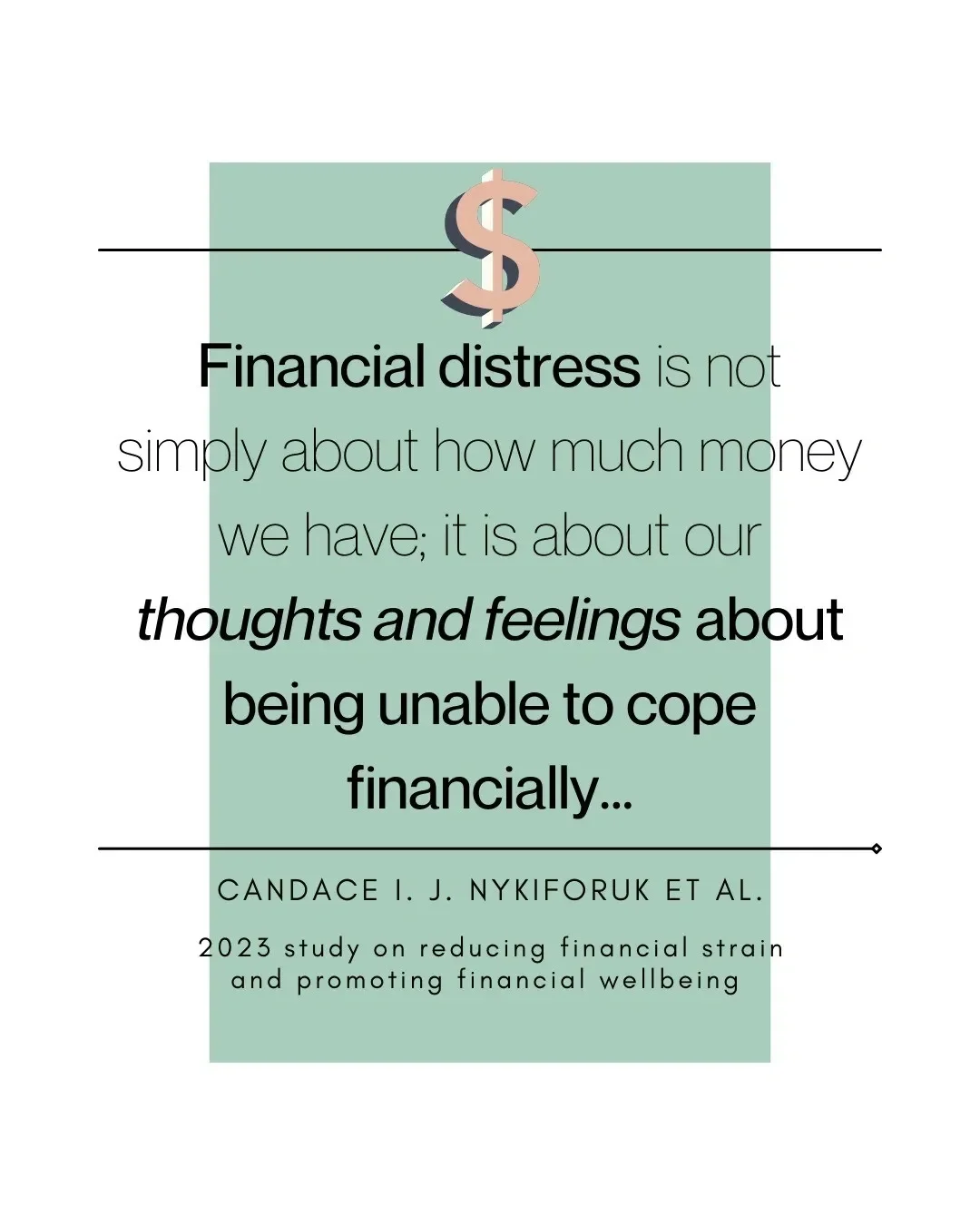
Additionally, mental processes such as ruminating and catastrophizing, and behavioral responses such as avoidance, distraction, or isolation, can signal a strong emotional reaction to money. A 2021 study on financial well-being, shame, and mental health outcomes found that high levels of money-related stress are linked to “engaging in unhelpful coping methods, such as excessive avoidance, overspending, and isolation.” Examining your behavior when resolving financial concerns can help validate how intense the activity makes you feel. If you tend to overspend or avoid thinking about your finances altogether, it could be a sign that you're experiencing high stress or anxiety related to money.
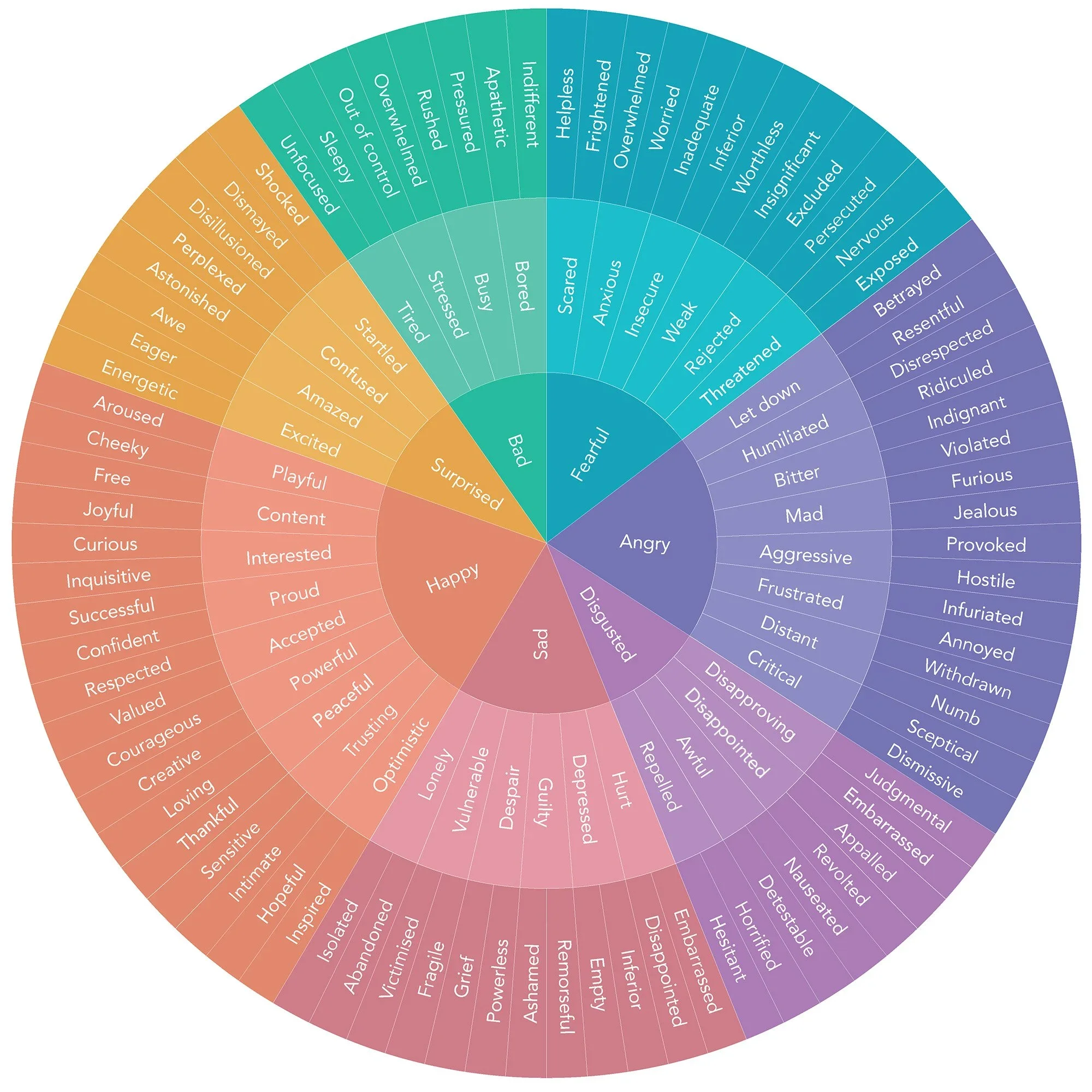
The Emotion Wheel from Calm.com created by Dr. Gloria Willcox
Step 2: Deescalate and regulate
After you've identified the emotion(s), it's necessary to deescalate your physiological response and regulate the emotion(s) so that you are not completely overwhelmed by them.
Use healthy coping skills to calm down and bring your emotional state closer to a neutral one. Some techniques you can try include 'TIPP,' reaching out to a friend, and self-soothing strategies.
Step 3: Identify any financial support available to you
Write down the people or resources you can turn to for financial help in an emergency. Consider options like family, friends, loans, local charities or resources, and national relief resources. Search on findhelp.org to locate financial relief programs in your area.
Step 4: Seek additional support
If identifying your emotional experience around money becomes overwhelming, take a break and seek additional support. It's essential to recognize that your emotions around money are shaped by various factors, including upbringing, family dynamics, societal and cultural expectations, and financial literacy. These factors can contribute to complex emotions, such as feelings of self-worth, permanence, and resentment, which can take a heavy emotional toll. Remember that it's perfectly normal to have complex emotions around money, and seeking professional help from a therapist can help you navigate them.
Approaching your finances doesn't have to be stressful. By recognizing your emotional experience, regulating your emotions, identifying your support system, and seeking professional help if needed, you can navigate your finances with confidence and ease. Remember that it's okay to ask for help. If you'd like my help managing financial distress, contact me to schedule a free consultation today.
Blea, J., Wang, D. C., Kim, C. L., Lowe, G., Austad, J., Amponsah, M., & Johnston, N. (2021). The Experience of Financial Well-Being, Shame, and Mental Health Outcomes in Seminary Students. Pastoral Psychology, 70(4), 299–314. https://link.springer.com/article/10.1007/s11089-021-00963-4